My apps…

Space Harvest Coming Soon Image of...I don't know what.

All-Seeing Interactive is a tiny web design and software company based in London, UK.

Tuesday 31 August 2010

Software Archaeology

If you’re anything like me, you hate moving web hosting, especially if you have several sites to move. I switched this site over to Slicehost a year and a half ago, and I’ve been very happy with them. I’m terrible at getting painful chores out the way, so I put off closing my old shared hosting account on Textdrive because there were a fair number of sites (and worse, IMAP email) that needed moving. Now that it’s coming up for renewal again, I figured if I don’t move the sites on it now, I probably never will.

One of the sites that needed moving was for some software I wrote some years ago (lifetimes ago in internet time) called Shared Space. Having already spent an inordinate amount of time migrating a friend’s blog to a newer version of Movable Type last week (and an even longer amount of time moving my brother’s email account), I decided not to bother trying to get PHP code I wrote 8 years ago running on this server.

What might have been

I considered just taking the website down and letting the domain expire, but I suppose of all the many, many spare-time projects I’ve abandoned over the years, the perennially-beta Shared Space still has a weird kind of hold over me. Plus, it’s a cool domain name to have, so I might as well use it for something.

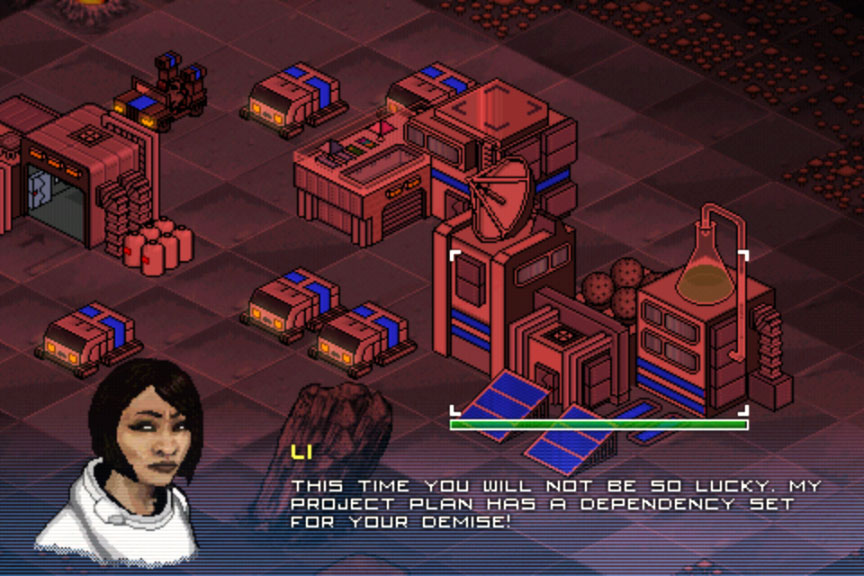
So, I’ve created a new single-page website about Shared Space at shared-space.net. The curious can download the last released version (circa April 2003), watch a video of the never-released Shared Space 3.0 (shown above, from 2008), and learn about where ASIHTTPRequest originally came from.

Posted by Ben @ 5:15 PM

Saturday 3 July 2010

ASIWebPageRequest - a new class for downloading complete webpages

ASIWebPageRequest is a new experimental addition to the ASIHTTPRequest family. It can be used to download a complete webpage, including external resources like images and stylesheets, in a single request.

Once a web page is downloaded, the request will parse the content, look for external resources, download them, and insert them directly into the html source using Data URIS. You can then take the response and put it directly into a UIWebView / WebView on Mac.

Find this in the Mac sample application

Why do this?

There are a number of advantages:

  • You have access to the whole page (including external resources) as a single string. This means you can cache the whole page indefinitely, which may be especially useful on iOS, where the WebKit browsing engine might not cache resources as much as you’d like. If a webpage is already cached, you can easily display it even if there is no internet connection available
  • You can more easily connect to pages that require authentication not just for the page itself, but for external resources too. This can be tricky to get right otherwise, especially if you need to use an authentication scheme like NTLM on iOS.
  • In future, you might be able to track the load progress for a whole page, or replace particular elements in the page easily with custom content (ASIWebPageRequest does not currently support either of these, but it could do in future)

How it works

ASIWebPageRequest works by downloading its URL, and looking at the content type.

HTML documents

If it gets a content type that looks like HTML / XHTML, it will parse the page as HTML. To do this, it first uses TidyLib to turn the page into an XML document, then runs an XPath query on the content using (Libxml to find external resource URLs. It creates its own internal queue, and adds a request for each external resource it finds. Once all requests have finished downloading, it will replace the content of the URL attributes in the original HTML document with a Base64-format data URI.

CSS documents

ASIHTTPRequest handles CSS documents in a similar way, but replaces URLs with data URLs using a simple find and replace.


Currently, ASIWebPageRequest can download images, stylesheets and scripts. Stylesheets are also parsed to find external images, and these are downloaded too. It could be extended relatively easily to support more tags (eg frames / iframes) - just modify the XPath query.

Limitations

  • Currently, only certain external resources are downloaded. A modern web page may contain many more that it doesn’t find (plugins etc). Additionally, many scripts fetch more data when they run. This means that there’s no guarantee all required external resources will be cached. However, on a typical page, ASIWebPageRequest should at least cut down on the loading times if most images are pulled from a previously cached version.
  • The output HTML is transformed, and may well be quite different from the original. In particular, outputted HTML is XHTML with a strict doc-type - this may well break pages relying on quirks mode layout.
  • TidyLib doesn’t seem to know about HTML5 yet. I’ve added some of the tags (eg header, nav etc) to allow it to preserve them, but there are probably lots more. Obviously, the resulting page will not conform to the XHTML standard, though I doubt this is likely to be a problem in most cases.
  • CSS parsing is a simple find and replace affair, so certain things may cause it to break
  • ASIWebPageRequest is currently rather memory hungry for complex pages, because it keeps all page data in memory at once
  • ASIWebPageRequests cannot currently be run as synchronous requests

Try it out

If you’re interested in trying out ASIWebPageRequest, you can grab a copy of ASIHTTPRequest that includes it from this branch in GitHub (Direct download link). To get it working, you’ll need to link against libtidy and libxml2. I found I needed to add the libxml2 path to my header search paths to get it to find the libxml headers.

There is a working example in the Mac sample application. To get a feel for what is possible, try saving out the response HTML into a file on your desktop, then turn off your internet access, and load it into your browser.

Posted by Ben @ 12:54 PM

Tuesday 29 June 2010

Donations for ASIHTTPRequest

Lots of people have enquired about making donations to support ASIHTTPRequest, but this is something I’ve resisted doing for a long time.

Over the last 6 months, ASIHTTPRequest has started to seriously eat into the time I have to do other things (eg earning money), so I’ve finally decided to turn on Pledgie on the GitHub project. You can make a donation by clicking on the Donate button on the GitHub project page, or by going here.

Lots of people have contributed code, bug reports and feature requests, but to be clear, any money donated goes to me. ASIHTTPRequest will always remain free of charge and BSD licensed. Please don’t feel under any obligation to donate, but all donations will be gratefully received.

Posted by Ben @ 10:02 AM

Saturday 26 June 2010

ASIHTTPRequest 1.7

ASIHTTPRequest v1.7 is available now on GitHub - you can grab the newest version directly from here.

This is a big release that includes updates for iOS4 and iPad, a download cache, a new more efficient threading model for asynchronous requests, plus loads more fixes and tweaks.

There's a list of what's new in the changelog, and I've made loads of updates to the documentation covering both new v1.7 features, and lots of older stuff I never got around to adding before.

Posted by Ben @ 10:39 AM

Wednesday 9 June 2010

WWDC update and a bit more on ASINetworkQueue

It’s been a pretty busy week at WWDC so far - my apologies to anyone who has sent me an email and hasn’t got a response yet. I’ll try to catch up with the backlog as soon as I have a bit more time.

A brief update on the experimental replacement for ASINetworkQueue I wrote about recently:

I got a chance to talk to an engineer from Apple yesterday, and based on his advice I have decided to stick with NSOperationQueue rather than pursue the new queuing model further. I believe this represents the best platform for current and future development. I’d still like to work to improve the behaviour of asynchronous requests that aren't explicitly run with a queue, this will probably happen after the 1.7 release.

Posted by Ben @ 8:09 PM